History:
The surname Renka belongs to that large and group of Indian family names whose exact origin has not been written down in any single clear record, yet whose shape, sound, and spread across India tell their own quiet story. Surnames in India rarely appeared overnight. Most grew slowly out of a person's village, occupation, family deity, or a respected ancestor, and over generations that word settled into a fixed family name passed down to children. Renka appears to follow this same pattern, most likely growing out of regional speech in eastern India, where names ending in "ka" are common and often carry a soft, affectionate, or descriptive quality in the local tongue. This kind of ending is familiar in Odia and other eastern Indian languages, where small changes to a root word are used to shape it into a personal or family name that feels natural to the ear and comfortable to pass on.
Looking at the word itself, Renka and its close spelling cousins, such as Rhenka, Renkaa, Renkah, and Renca, show how a single spoken name can end up written in several different ways once it moves from local dialect into formal documents. This is extremely common in Indian surnames generally. Before the age of printed records, spelling was never fixed. Over time, one branch of a family might end up spelling their name Renka while a cousin's branch, perhaps after moving to another district, became Renca or Rhenka. This is not a sign of different origins, but simply the natural drift that happens when oral tradition meets written record across different regions and different generations of officials.
The deeper root of the name may also connect to older Sanskrit-based words that carry meanings around light, colour, or dust, since many Indian names beginning with similar sounds draw from this wide and old linguistic pool. Sanskrit, being the root language behind so many regional Indian languages, including Odia, Hindi, Marathi, and Bengali, has shaped thousands of surnames across the country, often in ways that are no longer obvious to someone looking only at the modern spelling. A name like Renka could easily have begun as a slightly longer or differently stressed word that was shortened over time through everyday use, the way many long Sanskrit-origin words become shorter and simpler as families use them daily across many generations. This kind of gradual shortening and reshaping is one of the most common ways Indian surnames came to take their present form, and it fits well with how a name such as Renka would have developed in a village setting long before it was ever written in an official register.
When we think about how the surname Renka would have spread across India, it helps to remember how most Indian families moved in the centuries before modern transport. Movement was usually slow and local at first, with families shifting from one village to a neighbouring one in search of farmland, work, or marriage connections. Over a few generations, a name rooted in one small area could appear in several villages within the same district simply through these short, repeated moves. Families carrying the surname Renka would likely have followed this same wider pattern seen across eastern and central India, moving from smaller rural settlements towards growing towns where trade, farming administration, or new job opportunities drew people in from the surrounding countryside.
In the century since independence, the movement of Indian families accelerated enormously, and surnames that were once tied closely to a single region began appearing in cities and states far from where they started. Education, government jobs, and private industry pulled young people away from their ancestral villages towards state capitals and major cities, and from there, many went further still, into other parts of India and eventually abroad. This is almost certainly part of the reason the surname Renka can today be found scattered across more than one Indian state rather than staying fixed in a single tight pocket. Each move added a small new chapter to the family's story, while the surname itself remained the steady thread connecting a person living far from home back to the village and the ancestors where the name Renka first took root. Even without a single famous historical reference point, this everyday pattern of settlement, movement, and gradual spelling change gives the surname Renka a history that is genuinely rooted in the wider, well documented story of how Indian families and their names grew and travelled across the subcontinent over many generations.
Description:
The surname Renka is a Hindu surname found mainly among families who speak Odia and Hindi, pointing to roots that stretch across eastern and northern India. Families carrying this surname often trace their lineage through one of several gotras, including Angiras, Danoli, Kashyap, Mavanulla, and Rebaala. A gotra works like a family lineage marker going back to an ancient sage, and it still matters today when Hindu families think about marriage customs, since people are usually expected to marry outside their own gotra. The Angiras gotra, for example, traces back to the sage Angiras, one of the most respected rishis named in old Vedic texts, while Kashyap goes back to the sage Kashyapa, another widely known name in Hindu tradition. Danoli, Mavanulla, and Rebaala are gotra names that tend to be more local or regional in flavour, often tied closely to particular villages, clans, or smaller communities rather than appearing across all of India. Having several gotra options under one surname like Renka suggests that families carrying this name may have settled in different pockets of the country over time, picking up local gotra traditions as they went, rather than all descending from one single branch.
Alongside gotra, families with the Renka surname also hold onto kuldevta traditions, worshipping a family deity that has been passed down through generations. For this surname, the kuldevta can be Bhavani, Renuka Devi, or Venkateshwara, each representing a slightly different strand of devotion within the wider Hindu faith. Bhavani is a form of the Mother Goddess, closely tied to strength, protection, and the nurturing side of the divine feminine, and she is worshipped widely across central and western India. Renuka Devi holds particular interest here because her name echoes so closely with the surname Renka itself, and she is worshipped as a form of the Goddess in several regions of India, often linked with stories of devotion, sacrifice, and motherly protection. Venkateshwara, on the other hand, is a form of Lord Vishnu, best known through the famous hill shrine at Tirumala in Andhra Pradesh, and he draws devotees from right across southern and central India. Having three quite different kuldevta options shows how families with the Renka surname may have branched out geographically and spiritually, each household holding onto the deity that their particular ancestors chose to honour and pass down to their children.
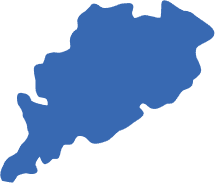
The fact that Renka families speak Odia and Hindi as their mother tongues tells us something about where this surname has grown roots. Odia is the main language of Odisha, a state rich in temple architecture, classical dance, and a long coastal history shaped by trade across the Bay of Bengal. Hindi speakers among Renka families may come from neighbouring states or from Odisha itself, where Hindi is often spoken as a second language alongside the regional mother tongue. Odisha has a proud cultural identity built around its temples, its script, and its festivals, and families who carry the Renka surname while speaking Odia would naturally take part in the state's biggest celebrations. Rath Yatra, the great chariot festival of Lord Jagannath held in Puri, draws huge crowds every year and remains one of the most important dates on the Odia calendar. Other festivals such as Durga Puja, Raja Parba, which celebrates womanhood and the arrival of the monsoon, and Kartik Purnima are also widely observed by Odia Hindu families. Traditional Odia food leans on rice as the everyday staple, paired with dishes like dalma, a lentil and vegetable stew, pakhala, which is fermented rice served with yoghurt and vegetables, and all sorts of sweets made from chhena, a fresh cheese that Odisha is famous for across India. Families with Hindi as a mother tongue would share many of these same Hindu festival traditions while also marking occasions like Diwali, Holi, and Raksha Bandhan, which are celebrated broadly across Hindi speaking regions of India.
Thinking about where the surname Renka might have come from, surnames in India often grew out of a family's occupation, their home village, a notable ancestor, or even a nickname that stuck over the years and was passed down the family line. Many Indian surnames tied to the eastern belt, including Odisha, carry sounds and roots that reflect the local language and older Sanskrit or Prakrit influences, and Renka fits that pattern well, especially given how closely it echoes the name of the goddess Renuka. It is quite common across India for a surname to grow out of devotion to a particular deity, where a family becomes known by a shortened or locally adapted version of a god or goddess's name over several generations. Migration within India has also shaped how surnames spread, as families moved for work, marriage, trade, or simply to find better land and opportunities, carrying their surname, gotra, and kuldevta traditions with them into new states and new communities. This would explain why a surname like Renka can show links to more than one language and more than one gotra, since different branches of the same broad family name may have settled far apart from each other over the centuries while still holding onto a shared thread of identity.
When it comes to spelling, surnames that travel across regions and languages often pick up small variations depending on who is writing them down and in which script. Renka may sometimes appear written as Renuka, Rencka, or Renkaa in informal records, documents, or casual conversation, though the core sound of the name stays close to its original form wherever it travels. These small shifts in spelling are a normal part of how Indian surnames move between Odia, Hindi, and English, especially when names are transliterated from one script into another. Despite these minor variations, the surname Renka continues to carry its own distinct identity, tied closely to the Hindu families who hold onto their gotra, their chosen kuldevta, and their regional language as proud markers of where they come from and who their ancestors were.