History:
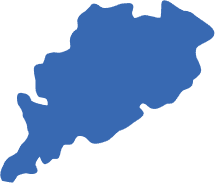
The surname Palasa carries within it the story of a place, a tree, and the many families who came to be known by the land they called home. In India, a large number of surnames did not begin as family names at all but as place names, and Palasa fits neatly into this pattern. Palasa is the name of a town and region in what is now the northern part of Andhra Pradesh, close to the border with Odisha, and it is widely believed that the surname Palasa grew out of this place name. People who lived in or came from the Palasa area, or who held land and standing there, would have come to be identified by the name of their town once they moved elsewhere or once records and documents began to need a way to tell families apart. This is a very old and very common way for surnames to form across India, and Palasa, Palasah, Palassa, Palaasa, and Palasaa are simply different spellings of the same name that have appeared over time as people wrote it down in their own local way.
The word itself has roots that go back to the Palasha tree, known in English as the flame of the forest, a tree that has long held a special place in Indian life and tradition. The Sanskrit word Palasha referred to this tree, which is known for its bright orange-red flowers that bloom in the dry months and light up the forest almost like fire. Over the centuries, as Sanskrit words passed into regional languages such as Telugu and Odia, the word changed shape slightly, and it is thought that the place name Palasa may have come from the presence of these trees growing in the area, or from older local names connected to the tree and the forest land around it. Place names tied to trees, rivers, hills, and forests are extremely common in Indian geography, since early settlers often named a village or town after the most noticeable natural feature nearby. In this way, the surname Palasa carries a small piece of natural history within it, linking a family name to the landscape itself rather than to a person or a title.
Historically, the region around Palasa sits in a part of coastal Andhra Pradesh that has seen centuries of settlement, farming, and trade. This part of the country, lying near the coast and close to river systems that fed into the Bay of Bengal, has long been fertile ground for agriculture, and towns in this belt grew as centres of trade between the coast and the inland areas. Families who settled in and around Palasa over generations would have built their lives around farming, local trade, and the slow growth of a town that served as a meeting point for people moving along old trade routes. As with many towns of this kind, Palasa would have grown steadily rather than suddenly, drawing people from nearby villages who came for work, trade, or marriage, and some of these families carried the name Palasa with them as they moved further afield in later generations.
Migration has played as big a part in the spread of the surname Palasa as its original roots. Families do not stay in one place forever, and over the centuries, people from the Palasa region moved to other parts of Andhra Pradesh, and in time to other states and even other countries, carrying their surname with them as a mark of where their family had come from. This pattern of migration followed the same paths that many families across South India have taken, moving first to nearby towns and cities for work or education, then further to larger cities such as Hyderabad, Visakhapatnam, and Chennai, and eventually overseas as opportunities opened up in the twentieth and twenty first centuries. Each time a family carrying the surname Palasa moved to a new place, the name travelled with them, slowly spreading far beyond the small town and region where it began. This is why today one can find the surname Palasa in communities far removed from its original home, even though its roots remain firmly tied to that one corner of Andhra Pradesh.
The spread of the surname Palasa across different regions of India also reflects a broader pattern seen in surnames that began as place names. As families moved and settled in new areas, their surname often became a kind of marker of identity, a way of remembering where they had come from even generations after the actual connection to the place had faded from daily memory. Over time, some branches of the family may have kept the name exactly as it was, while others allowed it to shift slightly in spelling or pronunciation depending on the local language and script used to record it. This is a natural process in any country with as many languages and scripts as India, and it explains why a name like Palasa can appear in slightly different forms in different records and regions, while still clearly pointing back to the same original place and the same family story.
Description:
The surname Palasa is found among Hindu families, particularly those with roots connected to the Telugu and Kannada speaking regions of southern India. The name itself is believed to draw from place related or nature related origins common in South Indian naming customs, where a family surname often grew out of a village name, a landmark, or a tree that held some meaning for the community. Palasa is also the name of a town in the Srikakulam district of Andhra Pradesh, close to the border with Odisha, and it is widely accepted that many families carrying the surname Palasa trace their lineage back to this area. Over generations, as families moved for work, trade, or marriage, the surname Palasa travelled with them across Andhra Pradesh, Telangana, and neighbouring Karnataka, which helps explain why both Telugu and Kannada appear as mother tongues among those who hold this name today. In Hindu tradition, surnames like Palasa were not just labels but markers of ancestry, often tied closely to a family's gotra, their place of origin, and their chosen family deity, all of which carried forward through generations as a way of keeping identity and memory alive.
Among the Palasa families, several gotras are recorded, including Aanapala, Aarakula, Dadhich, Kashyapa, Mavanulla, and Repaala. A gotra is best understood as a lineage line traced back to an ancient sage or forefather, and it plays an important part in Hindu customs, especially during weddings, where families check gotras to avoid matches within the same line. Each of these gotras, Aanapala, Aarakula, Dadhich, Kashyapa, Mavanulla, and Repaala, represents a distinct branch within the wider Palasa community, and knowing one's gotra remains a meaningful part of family identity even today. Alongside the gotra, the Palasa families also honour a kuldevta, or family deity, who is worshipped during important occasions such as weddings, housewarmings, and festivals. The kuldevtas associated with the Palasa surname are Bhavani, Khandoba, and Venkateshwara. Bhavani is a form of the Mother Goddess widely worshipped across Maharashtra and parts of South India, known for her protective and nurturing nature. Khandoba is a much loved warrior deity, especially popular in Maharashtra and northern Karnataka, often linked with courage and the protection of cattle and farming families. Venkateshwara, worshipped most famously at the Tirumala hill shrine in Andhra Pradesh, is one of the most visited and beloved forms of Lord Vishnu in the whole of South India. The presence of these three deities among Palasa families shows just how connected this surname is to the wider devotional traditions of the Deccan region, blending Maharashtrian and Andhra influences.
Language and script form another important part of the Palasa identity. Families carrying this surname mainly speak Telugu and Kannada, two of the oldest and richest languages of South India, both with scripts that developed over many centuries from early Brahmi inscriptions. Telugu, often praised for its soft and musical sound, is the main language of Andhra Pradesh and Telangana, while Kannada is spoken widely across Karnataka and carries its own proud literary history stretching back over a thousand years. Many Palasa families would have grown up speaking one of these languages at home, using it for daily conversation, prayers, and festival songs, while also learning Hindi or English for wider communication. This mix of Telugu and Kannada among Palasa households reflects the general pattern of South Indian communities settled near state borders, where two linguistic worlds often blend together comfortably in everyday life.
Festivals and food play a big part in the life of any Hindu family from this region, and Palasa households are no different. Telugu and Kannada speaking Hindu communities celebrate major festivals such as Ugadi, the new year festival marked with raw mango and neem flower dishes to represent the mix of sweet and bitter in life, along with Sankranti, a harvest festival celebrated with colourful kolams, kite flying, and sugarcane. Dasara, known as Navaratri in many parts of the country, is another grand celebration, especially tied to Goddess Bhavani worship, with nine nights of prayer, music, and festive gatherings. Since Khandoba and Venkateshwara are also honoured by Palasa families, visits to their temples, especially the famous hill temple of Tirumala, form a cherished part of family tradition, often done as a pilgrimage with prayers for health and prosperity. On the food side, traditional meals often include pesarattu, a green gram dosa popular in Andhra homes, along with pulihora, a tangy tamarind rice served during festivals and temple visits. Gongura, a tangy leafy vegetable unique to Andhra cuisine, is turned into pickles and chutneys loved across generations. Kannada households bring their own touch with dishes like bisi bele bath, a spiced rice and lentil dish, and holige, a sweet stuffed flatbread made during festive occasions. These shared food customs, alongside temple visits and festival rituals, help keep the Palasa family identity strong and connected across different towns and states.
While there is no widely documented list of famous individuals specifically carrying the Palasa surname, the name continues to carry meaning through its deep roots in gotra lineage, devotion to Bhavani, Khandoba, and Venkateshwara, and its strong ties to Telugu and Kannada speaking communities. The surname Palasa, much like many South Indian surnames tied to place names, stands as a living link between families today and the villages, deities, and traditions their ancestors once called home. Spelling of the name may sometimes vary slightly depending on region or personal preference, appearing as Palasa or Palassa in certain records, though the sound and meaning behind the name remain the same across these small variations. Through gotra, deity worship, language, and shared festival customs, the Palasa surname keeps alive a story of migration, faith, and belonging that stretches across generations of South Indian Hindu life.