History:
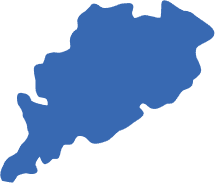
The surname Nahaka belongs to a quiet but distinct group of Indian family names whose roots lie in the eastern part of the country, particularly in the lands that today form Odisha. Like many Indian surnames, Nahaka did not arrive overnight as a fixed label. It grew slowly out of older words, local speech habits, and the way communities in a region described themselves, their work, or their standing within a village. The surname Nahaka, along with close variants such as Nahak, Nahka, Nahaaka, and Nahakha, shows how a single spoken word can settle into slightly different written forms depending on who was recording it, when, and in which part of the region. This kind of spelling drift is extremely common across Indian surnames, especially those that travelled through oral tradition long before they were ever written down in official records, land papers, or temple registers.
The deeper roots of Nahaka are tied to the linguistic patterns of eastern India, where Odia and related dialects shaped how local words took on surname status over time. In many parts of Odisha, surnames grew out of descriptive terms, occupational references, or local place names rather than being handed down from a single grand ancestor. A name like Nahaka would have most likely begun as a word used within a village or a small cluster of villages to mark out one family from another, perhaps based on a trait, a role, or a geographical feature tied to where that family lived or worked.
Ancient references to exact surnames like Nahaka are hard to pin down, because surname systems as we understand them today are a much later development compared to the ancient period of Indian history. In the earliest centuries, people were known mainly by personal names, by their father's name, or by the name of their clan or lineage rather than a fixed family surname. Surnames in the modern sense became more common and more fixed roughly from the medieval period onwards, as land ownership, revenue records, and social organisation became more detailed and families needed a way to mark their identity clearly across generations and across villages. It is within this broader historical shift, rather than in any single ancient text, that a name like Nahaka would have taken shape and begun to be used consistently.
Migration and settlement patterns played a big part in how the Nahaka surname moved beyond its original home base. Odisha itself has a long history of internal movement, with families shifting from inland villages towards river valleys, coastal belts, and growing towns in search of farmland, trade opportunities, or service under local rulers and landlords. As families carrying the Nahaka surname moved for these reasons, they carried the name with them into new villages and districts, where it would have mixed with the local population and sometimes picked up small changes in spelling or pronunciation. This is a very ordinary pattern in Indian surname history. A family settles in a new place, the local scribe writes the name slightly differently from how it was written back home, and over two or three generations that new spelling becomes just as valid and just as commonly used as the original.
Beyond Odisha, the spread of the Nahaka surname into other regions of India would have followed the same general forces that moved most Indian families across state lines over the last century or so. Better farmland, government jobs, railway work, education, and later private sector employment have all pulled people away from their ancestral villages and into cities and towns far from where their surname first took root. Someone carrying the Nahaka surname today might be living in Odisha still, close to wherever the name first grew, or might be several generations removed from that original place, having grown up in a completely different state because an earlier generation moved there for work or marriage. This kind of gradual spreading out, rather than one single dramatic migration, is how most regional Indian surnames like Nahaka ended up appearing in places far from their point of origin.
Looking at the word itself, the etymological background of Nahaka points towards roots in the Odia language family, where many surnames grew directly out of everyday spoken words rather than formal Sanskrit titles. Odia, like other eastern Indian languages, has its own patterns of softening consonants and shifting vowel sounds over time, which explains why a name can appear as Nahaka in one record and as Nahak or Nahka in another from the same general family line. This kind of flexible spelling was completely normal before printed records and standard spelling became the norm, and it is one of the clearest signs that a surname has a long oral history behind it rather than having been created recently in a fixed, written form. The Nahaka surname, in this sense, is a small but real piece of the much longer story of how Odisha's rural communities named themselves, organised themselves into family lines, and carried those names forward through centuries of ordinary village life, migration, and gradual change across the wider map of India.
Description:
The surname Nahaka is a Hindu surname carried mainly by families whose mother tongue is Odia, the language spoken across the eastern Indian state of Odisha. Odia itself has a rich and ancient history, with its own script that developed from older Brahmi based writing systems used in the region for many centuries. Families with the surname Nahaka would traditionally have grown up speaking Odia at home, reading and writing in the Odia script, and following customs that are closely tied to the land, rivers, and temple towns of Odisha. The surname Nahaka, like many Odia surnames, likely carries a story of place, work, or ancestry that has been passed down through generations, even if the exact origin has faded with time. What remains clear is that the Nahaka family name continues to be a marker of identity and belonging for those who carry it, linking them to the wider Odia speaking community and its long standing traditions.
Families with the surname Nahaka who follow Hindu customs would also observe gotra, which is a system used to trace lineage back to a common ancestor, often a sage from ancient times. The gotras associated with the surname Nahaka include Angiras, Dadhich, Kashyapa, Mudgal, and Raghu Kula. Each of these gotras carries its own deep history within Hindu tradition. The Angiras gotra traces back to the sage Angiras, who is remembered as one of the great seers mentioned in ancient Hindu texts. The Dadhich gotra is linked to the sage Dadhichi, known in stories for his selfless sacrifice for the greater good. The Kashyapa gotra connects to the sage Kashyapa, who is considered one of the most important rishis in Hindu tradition and is mentioned often in genealogical records. The Mudgal gotra is tied to the sage Mudgal, another respected figure from ancient times. The Raghu Kula gotra links families to the royal lineage of Raghu, a name closely associated with the great King Rama in Hindu epics. For families with the surname Nahaka, knowing their gotra is important during religious ceremonies, weddings, and other rituals, as it helps avoid marriages between people who share the same ancestral line, a practice still respected in many Hindu communities today.
Alongside gotra, many Hindu families also honour a kuldevta, which means a family deity who is believed to watch over and protect the family through generations. For the surname Nahaka, the kuldevtas named are Bhavani, Khandoba, and Venkateshwara. Bhavani is a form of the Goddess Durga, worshipped widely across India as a symbol of strength, courage, and protection. Khandoba is a deity particularly popular in parts of western and central India, often linked with warrior traditions and seen as a guardian figure for many families. Venkateshwara, also known as Balaji, is a much loved form of Lord Vishnu, especially associated with the famous hill temple at Tirumala in Andhra Pradesh, and is worshipped by families across many parts of India regardless of their home region. Families carrying the surname Nahaka who honour these deities would typically visit temples dedicated to them during important life events, festivals, and family gatherings, lighting lamps, offering prayers, and sometimes undertaking pilgrimages to temple towns connected with these gods and goddesses.
Since the surname Nahaka is rooted in Odia culture, it is worth looking at the wider traditions of Odisha that would shape daily life for such families. Odisha is known for its warm hospitality and its deep devotion to Lord Jagannath, whose temple in Puri draws millions of visitors every year. The grand Rath Yatra, or chariot festival, is one of the most important celebrations in Odisha, where huge wooden chariots carrying the deities are pulled through the streets by thousands of devotees. Other major festivals celebrated widely in Odisha include Durga Puja, which honours the Goddess Durga with great devotion and artistic displays, and Kali Puja, which follows soon after. Raja Parba is another festival unique to Odisha, celebrating womanhood and the arrival of the monsoon season with swings, games, and traditional sweets. When it comes to food, Odia cuisine is simple yet full of flavour, built around rice, lentils, and fresh vegetables. Dishes such as dalma, a lentil and vegetable stew, and pakhala, a dish of fermented rice soaked in water and often eaten during the hot summer months, are everyday favourites. Sweets hold a special place in Odia culture too, with rasagola, chhena poda, and kheeri often prepared during festivals and family celebrations. Families with the surname Nahaka, being part of this cultural fabric, would likely have grown up enjoying these same dishes and taking part in these same festivals, passing them down to their children as a way of keeping their heritage alive.
Many surnames in India, especially those tied closely to a particular region and language group like Odia, are carried proudly by families who may not seek wide public recognition but who still maintain strong ties to their roots, their gotra, and their family deity. The surname Nahaka stands as part of this larger pattern, representing a family line connected to the Angiras, Dadhich, Kashyapa, Mudgal, and Raghu Kula gotras, protected by the blessings of Bhavani, Khandoba, and Venkateshwara, and rooted firmly in the Odia speaking soil of eastern India.