History:
The surname Huika carries the quiet weight of the hills and forests of eastern India, where names often grow out of the land itself rather than from written records. When we look at Huika, we are looking at a name closely tied to the tribal heartland of Odisha, a region where surnames have passed down through spoken tradition for many generations. Unlike names that appear in old court papers or royal grants, Huika belongs to a world where memory, place, and family lineage shaped identity. This makes the story of Huika less about documents and more about people who lived close to the earth, in the wooded ranges and river valleys that mark this part of the country. The very sound of the name, sometimes written as Huikaa, Huyka, or Hooika, reflects how spoken names shift gently as they move from tongue to tongue across small hamlets and scattered settlements.
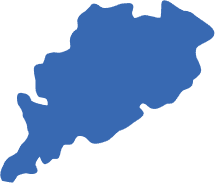
To understand the roots of the Huika surname, it helps to look at the geography of southern and western Odisha, a landscape of high hills, thick forest, and deep valleys. This is the home of many old tribal groups whose names, including Huika, remain tied to their native soil. The Kondh people, who have lived across these hills for a very long time, are among the communities where such surnames took shape. Names like Huika did not arrive from far away. They grew locally, drawn from family lines, from the places where people settled, and from the everyday speech of the region. Because these were oral traditions first and written ones much later, the spelling of Huika was never fixed in a single form. A government clerk, a schoolteacher, or a census taker might each write the sound a little differently, which is how variations such as Huikaa and Hooika came to sit alongside the more common Huika. This flexibility in spelling is a natural feature of names that began in speech rather than on paper.
The historical roots of Huika are bound up with the wider history of the Kondh and other Adivasi groups of Odisha, whose presence in these hills stretches back long before modern district lines were drawn. For centuries these communities lived in a way that depended on the forest and the land, farming on hill slopes, gathering from the woods, and building close village bonds that held families together across generations. Within such a setting, a surname like Huika served as a marker of belonging, linking a person to a particular family, a particular village, and a particular stretch of country. The name would have travelled with families as they moved between settlements, cleared new patches of land, or joined with neighbouring hamlets through marriage and kinship. In this sense, Huika is not simply a label but a thread that ties a person back to a shared past in the hills of Odisha. The endurance of the name through so many years speaks to the strength of these family lines and the deep attachment people held to their home ground.
Migration and settlement have always played a part in how a name like Huika spread across regions. In the hilly districts of Odisha, families often moved short distances in search of better farming land or safer ground, and over time these small movements added up to a wider spread of the surname across neighbouring areas. As roads improved and as people began to travel further for work, study, and trade, the Huika name reached beyond its original hills into towns and cities, and in some cases into other states. Yet even as families settled in new places, the name kept its link to the land of its origin. This pattern of gradual movement, rather than sudden long-distance travel, is typical of many tribal surnames of eastern India, and it explains why Huika remains most strongly rooted in Odisha while also appearing here and there among families who have moved away. The steady, quiet spread of the name mirrors the steady, quiet lives of the people who carried it, working the land and holding fast to their family ties even as the world around them changed.
The linguistic and etymological background of Huika sits within the broader family of tribal names from the Odisha hills, where local languages and dialects shaped the sounds that became surnames. Names in this tradition often carry meanings drawn from nature, from family founders, or from the places people called home, though the exact sense of a given name can fade over the years as spoken tradition passes it along. What remains clear is that Huika belongs to a naming style rooted in local speech rather than in Sanskritised or courtly forms, which sets it apart from many surnames found in the plains. The soft, open sound of Huika, and its cousins Huyka and Hooika, points to a name that was easy to say and easy to remember, well suited to the close-knit village life from which it came. Studying such a name offers a window into the older ways of the region, where identity was carried in the voice and handed down within the family, and where a surname like Huika still holds a living connection to the hills, forests, and people of Odisha.
Description:
The surname Huika belongs to some of the oldest tribal communities of eastern India, and it carries with it a long story of forest life, close family bonds, and a deep respect for nature. People who carry the Huika name are mainly found among the Dongria Kondh, the Khond or Kondh, the Kondh also known as Kandha, and the Saora communities. These groups have lived for many generations across the hills and valleys of Odisha and the areas nearby, where dense forests, flowing streams, and steep slopes have shaped their daily lives. The Huika name is tied strongly to these communities, and to understand the surname it helps to understand the people who have carried it through the years. Their way of living, their beliefs, and their bond with the land all form the background to a name like Huika.
The Dongria Kondh, one of the communities linked with the Huika surname, are well known for living in the Niyamgiri hills of Odisha. The word Dongria comes from the local term for hill, and it points to how these people have made their homes on the slopes and highlands. They are skilled farmers who grow crops on the hillsides, and they are especially famous for tending groves of fruit trees such as jackfruit, mango, banana, pineapple, and orange. For the Dongria Kondh, the Niyamgiri hills are not just a place to live but a sacred home, and they hold the mountain god Niyam Raja in the highest regard. Families who carry the Huika name within this group share in these old traditions of farming, fruit growing, and honouring the hills that give them food and shelter. Their bright, hand woven clothing, their silver and bead ornaments, and their carefully kept gardens all speak of a people who take great pride in their land and their customs.
The wider Kondh or Khond community, and the Kondh known as Kandha, are among the largest tribal groups in Odisha, and they are also spread into parts of Andhra Pradesh. The name Kondh is often linked to the word for hill or mountain, again showing how deeply these communities are connected to high and forested country. They have long lived by farming, hunting in the forests, and gathering fruit, honey, roots, and other gifts of the woodland. Many Kondh people speak Kui and Kuvi, which are languages of the Dravidian family, and their songs, tales, and sayings have been passed down by word of mouth from one generation to the next. A person bearing the Huika surname within the Kondh community would belong to this proud tradition of hill farmers and forest dwellers, people who have kept their languages and their old ways alive across a very long stretch of time. Their village life is built around close family groups and shared work, where planting, harvesting, and building are often done together.
The Saora, sometimes called Savara or Sora, are another ancient community connected with the Huika name, and they too make their home mainly in Odisha and in parts of Andhra Pradesh. The Saora are counted among the oldest tribal peoples of India, and their name appears in very old texts and stories. They are gifted farmers who practise both settled and shifting cultivation on the hills, and they are especially admired for their striking wall paintings, often called ikons, which they create inside their homes to mark special moments and to seek blessings. These paintings, made with simple white pigment on earthen walls, show people, animals, the sun, the moon, and scenes of daily life. The Saora language belongs to the Munda group, and it is closely woven into their songs and rituals. A Huika family within the Saora fold would share in this heritage of farming, painting, and storytelling, keeping alive customs that reach back many hundreds of years. The care they put into their art and their fields shows a people who find meaning in both beauty and hard work.
Across all of these communities, food and celebration follow the rhythm of the land and the seasons. Rice, millets such as ragi, pulses, and a wide range of forest fruits and vegetables form the heart of the daily meal, along with items gathered from the woods like mushrooms, tubers, and wild greens. Festivals are closely tied to sowing and harvest, and to giving thanks for a good crop and a healthy year. The Dongria Kondh, the Kondh, and the Saora all mark the turning of the farming seasons with gatherings where music, dance, and shared feasting bring the whole village together. Drums, flutes, and rows of dancers moving in step are a common and much loved sight at these times. Some among these communities also follow Buddhist beliefs, and this faith sits alongside their older customs of honouring nature, the hills, and the spirits of the land. In this way, the people who carry the Huika surname hold together many layers of belief and practice, blending devotion with a lasting love of their forests and fields.
The Huika surname itself may be spelt or pronounced in slightly different ways from place to place, as is common with names drawn from spoken tribal languages that were written down only later. You may come across forms such as Huka, Huikka, Hueka, and Huyka, all pointing back to the same family name. These small differences often appear when a name passes from a spoken tongue into written records, or when it travels from one village or district to another. Whatever the spelling, the Huika name remains a mark of belonging to some of the oldest and most rooted communities of eastern India. It speaks of families who have lived close to the hills and forests for a very long time, who have kept their languages, their art, and their festivals alive, and who continue to pass on their customs with warmth and pride. To carry the Huika surname is to be part of this enduring story of the Dongria Kondh, the Kondh, the Kandha, and the Saora people, a story shaped by the land, the seasons, and a strong sense of home.